

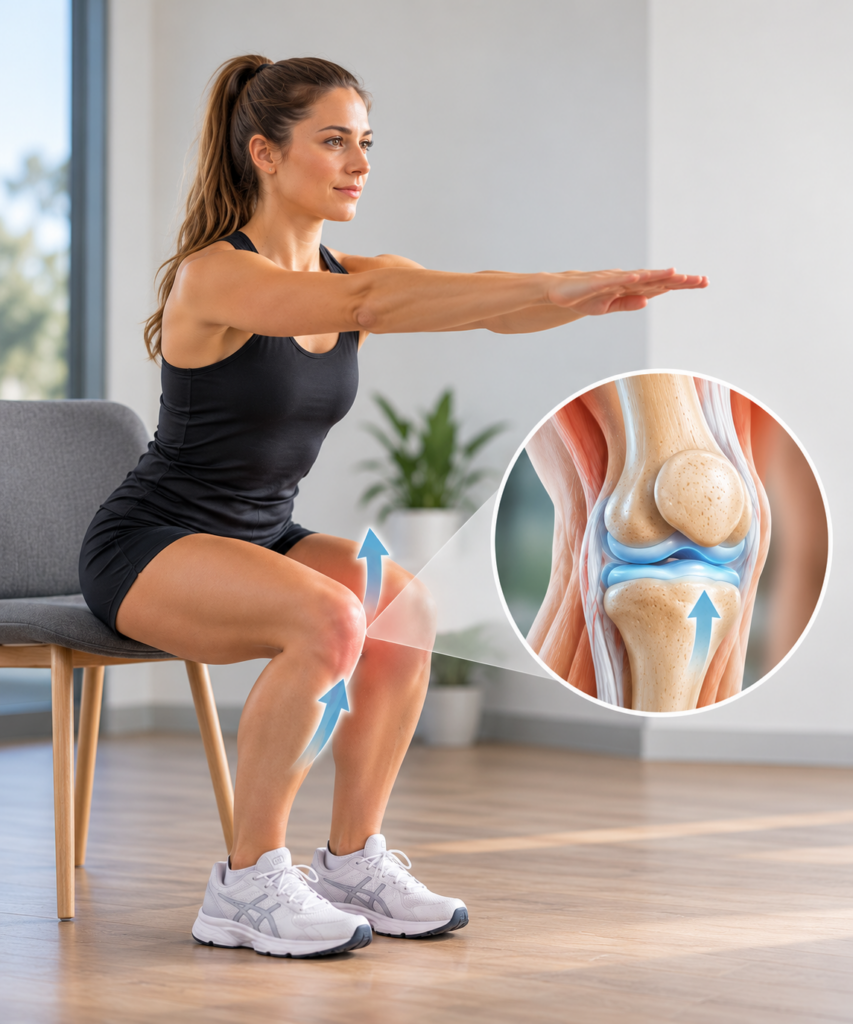
If you have been diagnosed with knee osteoarthritis (OA), hearing phrases like “wear and tear” or “bone on bone” can make you hesitant to move. It is natural to worry that bending, loading, or putting weight through your knee will cause further damage. However, modern orthopedic and physiotherapy research shows a very different reality: movement is medicine for your joint cartilage, provided the load is carefully controlled.
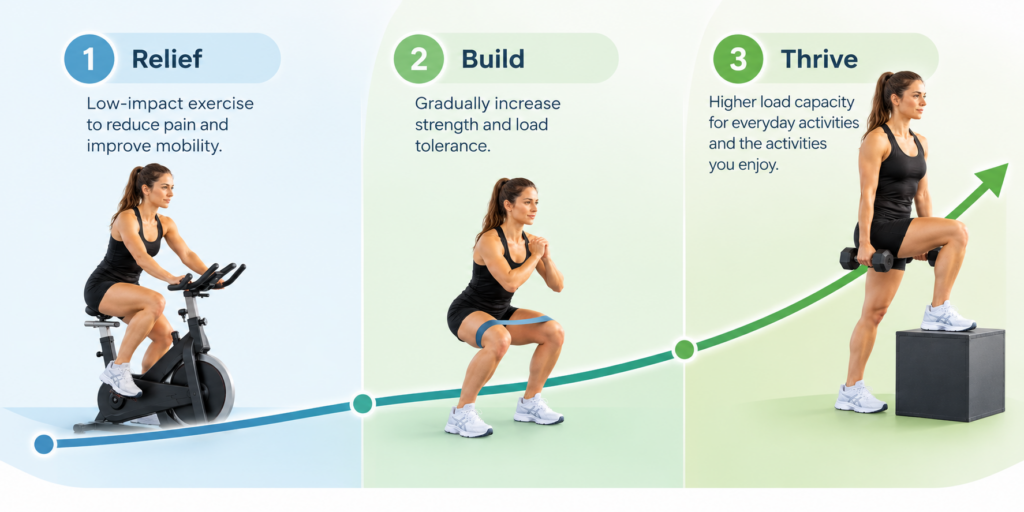
Instead of resting your knee into stiffness, the most effective long-term treatment strategy is to systematically build your knee’s load tolerance using low-impact exercise and progressive loading.
1. Understanding Joint Load and Mechanotransduction
Joint cartilage does not have a direct blood supply. Instead, it relies on dynamic compression and decompression—much like a sponge—to circulate synovial fluid, deliver key nutrients, and remove waste products.
When you engage in structured, controlled exercise, your joint cells (chondrocytes) convert mechanical stimuli into cellular responses through a process called mechanotransduction. Controlled mechanical loading stimulates matrix synthesis, helps preserve existing cartilage integrity, and strengthens surrounding muscles like the quadriceps, hamstrings, and calves.
The goal of physical therapy is not to remove load from the joint entirely, but to find your knee’s optimal loading envelope—the sweet spot where movement stimulates healing and strength without triggering prolonged flare-ups.
2. Low-Impact Exercise: Buffering Joint Irritation
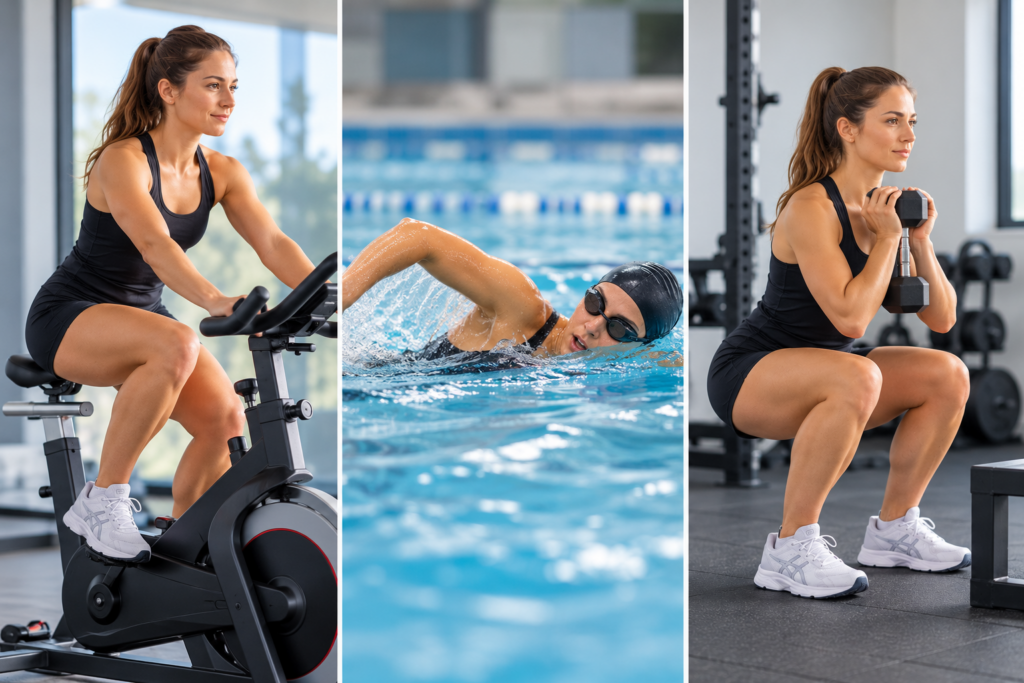
When joint cartilage is sensitized, sudden high-impact forces (such as running on hard pavement or jumping) can exceed its temporary load capacity, leading to pain, swelling, and stiffness. Low-impact exercises serve as the initial “buffer,” allowing you to train your cardiovascular system and surrounding muscles without excessive impact forces.
Key Low-Impact Modalities
- Stationary Cycling: Cycling provides continuous, smooth knee flexion and extension without bearing your full body weight. It promotes synovial fluid circulation, decreases joint stiffness, and strengthens the quadriceps.
- Aquatic Exercise & Swimming: Water buoyancy reduces gravity’s effect on your weight-bearing joints, allowing you to move through fuller ranges of motion with minimal compression pain.
- Low-Impact Resistance Work: Utilizing resistance bands, leg presses, or bodyweight box squats allows you to build foundational strength under predictable speeds and angles.
3. The Power of Progressive Loading
While low-impact exercise buffers irritation, progressive resistance training is what long-term knee stability depends on. To make everyday tasks easier—like climbing stairs, rising from a deep chair, or walking up hills—your muscles must gradually adapt to higher resistance levels.
Progressive loading involves incrementally increasing exercise variables over time, such as:
- Range of Motion: Starting with shallow squats or step-ups and gradually deepening the range as joint comfort improves.
- Resistance / Weight: Progressing from bodyweight movements to resistance bands, dumbbells, or weighted cable machines.
- Tempo & Control: Slowing down the movement (focusing on eccentric control) to increase time under tension without escalating maximum impact.
4. How to Gauge Your Joint Response: The 24-Hour Rule
A crucial component of successful loading is learning how your body responds to exercise. Experiencing mild discomfort during or after a new exercise program is normal and does not equate to joint damage.
To manage your exercise intensity safely, follow the 24-Hour Rule:
| Response Level | Symptom Behavior | Action Plan |
| Green Light (Safe) | Mild pain during exercise (0–3/10) that settles within 24 hours. No significant morning swelling. | Continue with current progression or increase load slightly. |
| Yellow Light (Monitor) | Moderate pain (4–5/10) during exercise that returns to baseline by the next morning. | Maintain current load until the body fully adapts. |
| Red Light (Overloaded) | Sharp pain (>5/10), increased swelling, or stiffness lasting longer than 24 hours. | Temporarily scale back weight, volume, or depth for 2–3 sessions. |
5. Practical Steps to Get Started
- Get an Individualized Assessment: A qualified physiotherapist can evaluate your knee range of motion, muscle balance, and movement biomechanics to set your starting baseline.
- Commit to Consistency: Research shows that consistent exercise performed 2 to 3 times per week yields significantly greater pain reduction than intermittent, high-intensity workouts.
- Combine Exercise with Daily Activity: Low-impact loading supports healthy joint function, helping you remain active, maintain a healthy body weight, and stay engaged with activities you enjoy.
Summary
Managing knee osteoarthritis is not about resting the knee until it stops hurting; it is about systematically restoring your joint’s capacity to handle real-world demands. By combining low-impact exercise to buffer irritation with progressive loading to build structural strength, you can reduce pain, restore mobility, and protect your knee health for years to come.
References
- Mo, L., Jiang, B., Mei, T., & Zhou, D. (2023). Exercise Therapy for Knee Osteoarthritis: A Systematic Review and Network Meta-analysis. Orthopaedic Journal of Sports Medicine, 11(6), 23259671231172773. https://doi.org/10.1177/23259671231172773 Cited by: 160