

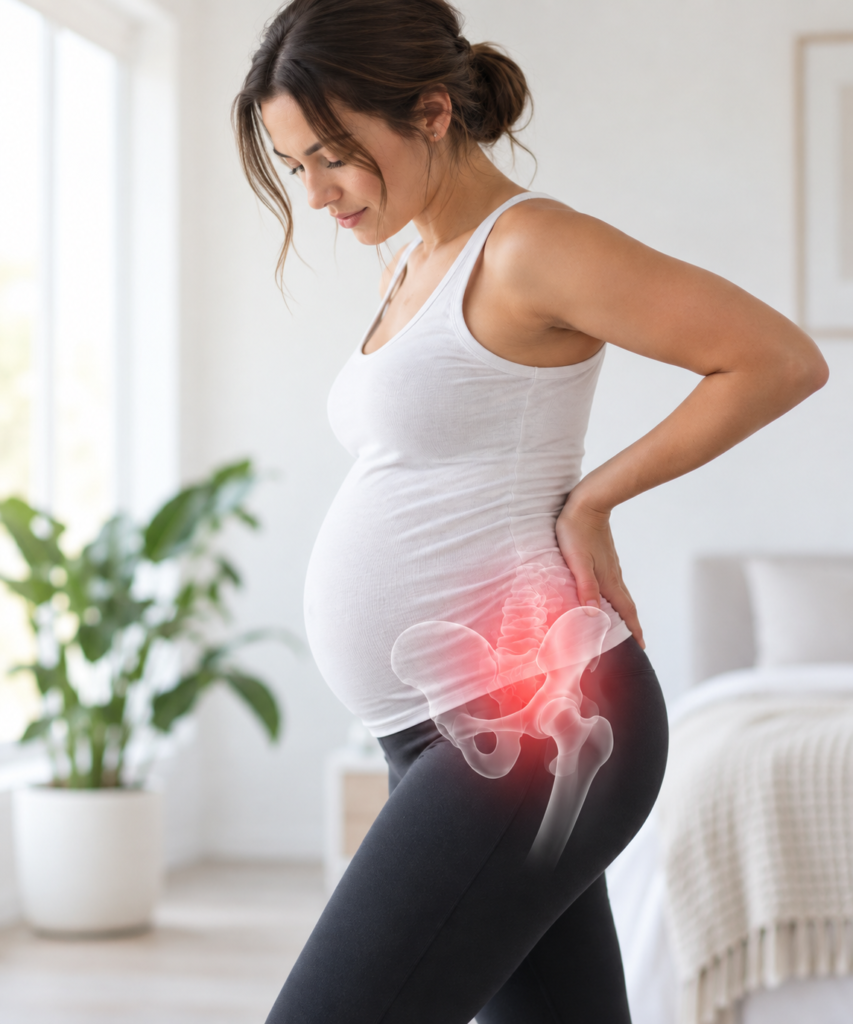
Pregnancy brings profound physical transformations. While many of these changes are exciting, the sudden shift in load and hormonal environment can sometimes lead to sharp, aching, or debilitating pain in the pelvis. If you are feeling a deep ache near your tailbone or a sharp, catching pain at the front of your pubic bone, you are likely dealing with Pregnancy-Related Pelvic Girdle Pain (PGP).
Historically (and incorrectly) labeled as standard “pregnancy discomfort” or “Symphysis Pubis Dysfunction (SPD),” PGP is a treatable musculoskeletal condition affecting up to 50% of pregnant women.
What Is Pelvic Girdle Pain?
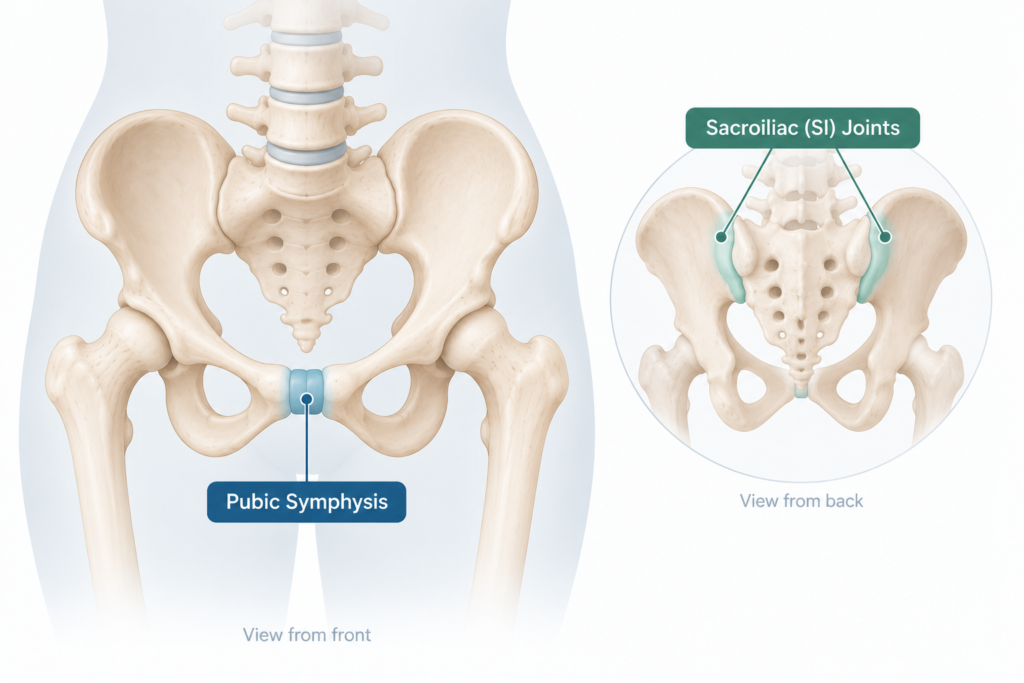
The pelvis operates as a dynamic ring structure bound by three primary joints:
- Sacroiliac (SI) Joints: Two joints located at the back of the pelvis on either side of the lower spine.
- Pubic Symphysis: The fibrocartilaginous joint located at the front center of the pelvis.
During pregnancy, the surge of hormones like relaxin increases ligamentous laxity to prepare your body for birth. Combined with a shifting center of gravity and altering weight distribution, one joint in the pelvic ring can begin to move unevenly or become hypomobile (stiff). When one joint loses smooth movement, the remaining joints overcompensate, creating asymmetrical stress, localized inflammation, and muscle guarding.
Common Symptoms
- SI Joint Pain: Pain on one or both sides of the lower back/gluteal region, sometimes radiating down the back of the thigh.
- Pubic Symphysis Discomfort: Tenderness, aching, or sharp pain directly over the front pubic bone, which can extend into the groin or inner thighs.
- Aggravating Movements: Pain when turning over in bed, stepping into a car, climbing stairs, or standing on one leg.
Safe, Evidence-Based Strategies to Manage PGP
Managing PGP does not mean waiting until delivery to find relief. Targeted physical therapy interventions offer immediate symptom relief while establishing long-term functional stability.
1. Targeted Manual Therapy & Joint Alignment
Targeted hands-on physical therapy is one of the most effective ways to restore normal mechanics.
- Gentle Joint Mobilization: Soft, non-thrust mobilizations applied to stiff SI joints or the lumbar spine relieve asymmetrical torque on the pubic symphysis.
- Soft Tissue Release: Releasing hypertonic surrounding structures—specifically the gluteal complex, adductors (inner thighs), and piriformis—reduces the pull on sensitive pelvic attachments.
2. Functional Movement & Daily Activity Ergonomics
Because asymmetrical loading exacerbates PGP, small modifications to daily movements can make a massive difference in symptom intensity.
- The “Log Roll” in Bed: Keep your knees and hips aligned together when rolling over in bed or getting out. Avoid twisting your torso while leaving your legs behind.
- Symmetrical Weight-Bearing: Avoid standing on one leg while getting dressed. Sit down to put on pants, socks, and shoes.
- Vehicle Transfers: Sit on the edge of the car seat first with your knees together, then swivel both legs into the car simultaneously.
- Nighttime Positioning: Sleep on your side with a firm pillow placed between your knees and ankles to keep your hips stacked symmetrically.
3. Stability & Rehabilitation Exercises
Building functional, dynamic support around the pelvic girdle takes the pressure off irritated ligaments.
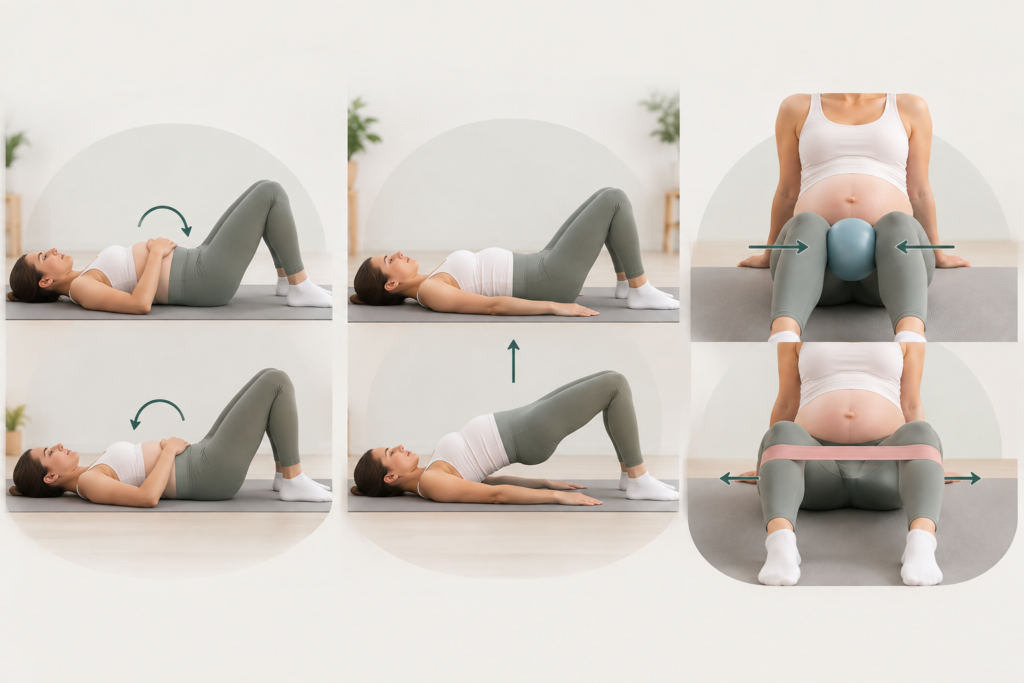
- Deep Core & Pelvic Floor Co-Contraction: Focus on gentle, coordinated activations of the transversus abdominis (your deep anatomical corset) and the pelvic floor. Exhale and gently draw your lower abdomen toward your spine while lifting the pelvic floor.
- Seated or Four-Point Pelvic Tilts: Gentle pelvic rocking on a Swiss ball or hands-and-knees helps release lower back tightness without straining the pubic symphysis.
- Sub-Maximal Adductor/Abductor Isometrics: Squeezing a small soft ball or block between your knees while lying down can gently realign the pubic symphysis via balanced muscle contraction.
4. Pelvic Support Belts & External Support
A specialized pregnancy pelvic support belt acts as external ligaments, offering gentle compression across the SI joints and pubic symphysis. Wearing a belt during periods of standing or walking reduces joint shearing forces and allows irritated tissues to settle.
How Physiotherapy Can Help You
Every pregnancy is unique, and pelvic pain should never be accepted as an inevitable struggle. A women’s health physiotherapist can perform a comprehensive biomechanical assessment to pinpoint whether your pain stems from SI joint stiffness, pubic symphysis instability, or muscular imbalances.
With an individualized treatment plan comprising hands-on care, tailored stability exercises, and practical daily modifications, you can move through your pregnancy with confidence and comfort.
References
- Vleeming, A., et al. (2008). European guidelines for the diagnosis and treatment of pelvic girdle pain. European Spine Journal, 17(6), 794–819.
- Gutke, A., et al. (2018). The Severity and Impact of Pelvic Girdle Pain and Low-Back Pain in Pregnancy: A Multinational Study. Journal of Women’s Health, 27(4), 510–517.
- Royal College of Obstetricians and Gynaecologists (RCOG). (2015). Pelvic Girdle Pain and Pregnancy: Information for You. RCOG Patient Information Leaflet.
- Elden, H., et al. (2005). Effects of acupuncture and stabilising exercises as adjunct to standard treatment in pregnant women with pelvic girdle pain: randomised single blind controlled trial. BMJ, 330(7494), 761.