When simple daily movements—like putting on socks, getting out of a car, or taking a morning stroll—begin with a deep ache in the groin or front of the thigh, many adults fear the worst: “Is a total hip replacement my only option?”
While hip osteoarthritis (OA) is a common condition affecting millions worldwide, surgery is rarely the required first step. Clinical guidelines consistently recommend conservative, movement-based management as the primary treatment for mild to moderate hip OA.
With targeted physiotherapy, progressive strengthening, and specific range-of-motion routines, you can reduce joint stiffness, protect your cartilage, and maintain an active lifestyle for years to come.
Why Does Hip Osteoarthritis Cause Stiffness?
Hip OA involves gradual changes in the articular cartilage lining the ball-and-socket joint, along with low-grade inflammation in the surrounding capsule and synovial fluid.
The primary driver of joint stiffness in hip OA is a lack of adequate fluid distribution:
- The “Sponge” Effect: Articular cartilage has no direct blood supply. It receives nutrients through synovial fluid, which is squeezed in and out during movement, like a sponge.
- Inactivity Cycle: When movement hurts, people tend to rest more. Reduced movement thickens synovial fluid, tightens the joint capsule, and accelerates muscle weakness around the pelvis.
- Capsular Tightness: The fibrous capsule surrounding the hip joint restricts internal rotation and extension, making the joint feel “locked” or sticky, particularly after waking up or prolonged sitting.
The Core Pillars of Non-Surgical Management
1. Neuromuscular Exercise & Progressive Strengthening
Supervised active exercise therapy is one of the most effective non-surgical interventions for hip OA. Targeted strengthening of the gluteus medius, gluteus maximus, and quadriceps redistributes ground reaction forces away from the joint surfaces and restores dynamic pelvic stability during walking.
Evidence-based protocols like GLA:D® (Good Life with osteoArthritis in Denmark) emphasize that 6–12 weeks of structured, neuromuscular exercise significantly improves function, reduces pain flare-ups, and delays or prevents the need for joint replacement.
2. Manual Therapy & Joint Mobilisation
Hands-on physiotherapy techniques—including long-axis hip distraction, posterior-to-anterior joint mobilisations, and soft tissue release around the iliopsoas and deep gluteals—help restore joint play. Manual therapy temporarily lowers pain intensity, opening a critical “window of opportunity” to perform active mobility exercises with far less discomfort.
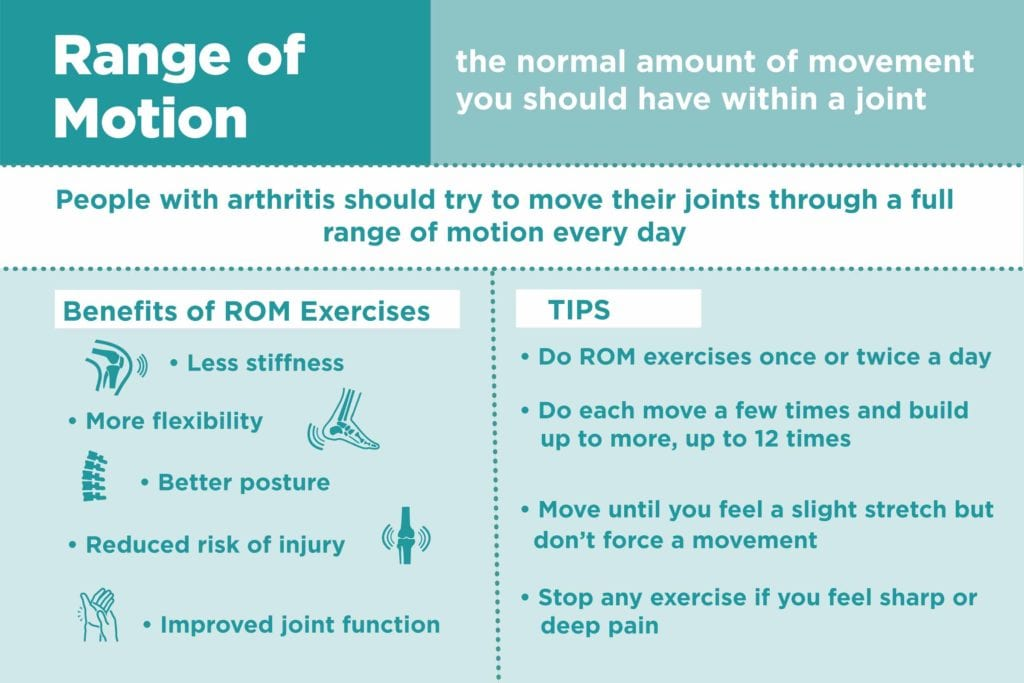
3. Preserving Range of Motion (“Motion is Lotion”)
To prevent joint contractures, daily movement through available range-of-motion limits is essential.
4. Load Management & Activity Modification
Preserving joint range does not mean pushing through sharp pain. A physiotherapist helps you find your current “load tolerance”—adjusting step counts, incorporating low-impact cardio (such as cycling or water-based exercise), and optimizing biomechanics so you stay active without overloading irritable tissue.
3 Gentle Mobility Exercises for Daily Relief
Note: Perform these movements within a comfortable, pain-free range. A mild, tolerable stretch feeling is normal, but sharp joint pain means you should reduce the movement depth.
| Exercise | Primary Goal | How to Perform |
| Supine Gentle Hip Rotations | Restores internal & external rotation | Lie on your back with knees bent and feet flat. Gently let your knees sway side to side in a controlled, windshield-wiper motion. |
| Quadruped Rock-Backs | Improves hip flexion & joint glides | On hands and knees, slowly rock your hips back toward your heels until a gentle stretch is felt in the buttocks/hips. Hold for 2 seconds, then return. |
| Bridge with Glute Squeeze | Strengthens hip extensors & unloads joint | Lie on your back, knees bent. Drive through your heels to lift your hips until aligned with your shoulders. Squeeze glutes at the top for 3 seconds. |
When Should You See a Physiotherapist?
You don’t need to wait for pain to become severe before seeking professional guidance. A comprehensive assessment includes:
- Detailed mobility testing of hip flexion, extension, and internal rotation.
- Functional assessment of gait, single-leg balance, and squatting mechanics.
- A personalized, progressive home exercise plan tailored to your lifestyle goals.
By taking an active, structured approach early, you retain control over your movement health and keep surgery as a distant last resort.
References
Journal of Orthopaedic & Sports Physical Therapy. (2025). Hip pain and mobility deficits – Hip osteoarthritis: Revision 2025 clinical practice guidelines. Journal of Orthopaedic & Sports Physical Therapy, 55(11), CPG1–CPG31. https://doi.org/10.2519/jospt.2025.0301
Skou, S. T., & Roos, E. M. (2019). Physical therapy for patients with knee and hip osteoarthritis: Supervised, active treatment is current best practice. Clinical and Experimental Rheumatology, 37(Suppl 120), 112–117.