A recent scoping review analyzed studies investigating eccentric exercise programs for lower limb conditions.
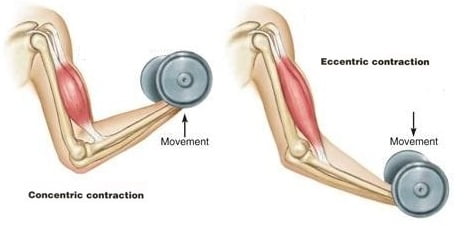
Researchers screened over 1,800 studies, eventually selecting five clinical studies that specifically examined eccentric training and range of motion outcomes.
Across these studies:
- Participants had chronic lower limb musculoskeletal disorders
- Eccentric training programs lasted 4 to 12 weeks
- Programs included 16 to 168 exercise sessions
- Exercises were customized depending on the specific injury
Despite differences in protocols, researchers observed improvements in range of motion and functional mobility.
How Range of Motion Was Measured
Clinicians in these studies used several reliable methods to assess mobility improvements:
Goniometry
- A standard physiotherapy tool used to measure joint angles.
Weight-Bearing Lunge Test
- Commonly used to assess ankle dorsiflexion mobility.
Peak Torque Angle Measurement
- Used to evaluate muscle performance during strength testing.
These measurements help clinicians objectively monitor rehabilitation progress.
Conditions That May Benefit from Eccentric Training
Eccentric rehabilitation programs are commonly used for a range of lower limb conditions, including:
Achilles tendinopathy
- One of the most widely researched conditions for eccentric loading.
Patellar tendinopathy (Jumper’s knee)
- Eccentric squats are frequently used in rehabilitation.
Hamstring injuries
- Eccentric strengthening helps improve muscle length and prevent recurrence.
Calf muscle injuries
- Gradual eccentric loading improves both strength and flexibility.
Plantar fasciopathy
- Eccentric loading of the calf and plantar fascia may improve symptoms.
Why Eccentric Training Improves Flexibility
Many people assume that stretching alone is the best way to improve flexibility.
However, research suggests eccentric training can enhance flexibility through several mechanisms.
- Increased Muscle Fascicle Length
Eccentric loading can stimulate muscles to adapt by increasing fascicle length, allowing greater joint movement. - Improved Tendon Structure
Controlled loading helps stimulate tendon remodeling, improving its ability to tolerate stress. - Better Neuromuscular Control
Eccentric exercises require the nervous system to control movement during lengthening, improving coordination. - Higher Strength at End Range
Strengthening muscles in lengthened positions improves control at the end of range, reducing injury risk.
Why Eccentric Exercises Must Be Prescribed Carefully
Although eccentric training is highly beneficial, it must be prescribed appropriately.
Incorrect loading can cause excessive soreness or aggravate symptoms.
A physiotherapist typically adjusts:
- exercise intensity
- number of repetitions
- training frequency
- progression of load
- functional movement patterns
Programs are also tailored to the specific stage of healing.
Importance of Progressive Loading
Most successful rehabilitation programs follow the principle of progressive overload.
This means gradually increasing:
- resistance
- repetitions
- complexity of movement
For example, an Achilles rehabilitation program may progress through stages:
- Double-leg heel lowering
- Single-leg heel lowering
- Weighted eccentric calf exercises
- Functional loading such as hopping or running drills
This gradual progression helps restore both strength and mobility safely.
Why More Research Is Still Needed
Although the evidence supporting eccentric training is promising, researchers highlighted some limitations.
Most available studies involved chronic conditions, meaning patients had long-standing injuries.
More research is needed to understand:
- how eccentric training works during early healing stages
- how it affects tissue structure
- optimal training parameters
- best protocols for different injuries
Future studies will help refine rehabilitation programs even further.
How Physiotherapy Integrates Eccentric Training
At Physio Link, eccentric exercises are commonly integrated into rehabilitation programs when clinically appropriate.
However, they are rarely used alone.
A comprehensive rehabilitation program may include:
- mobility exercises
- eccentric strengthening
- functional movement training
- neuromuscular control exercises
- sport-specific rehabilitation
The goal is not just pain reduction, but full functional recovery.
Key Takeaway
Eccentric training is one of the most valuable tools in modern rehabilitation.
Research shows that it can help improve:
- strength
- flexibility
- tendon health
- joint mobility
When properly prescribed, it can significantly enhance recovery from many lower limb musculoskeletal conditions.
Reference
Weiss S, Kreuzer M, Brunschmid C, Kern B, Lohkamp M, Diermayr G. Eccentric training modalities to affect range of motion in the rehabilitation of lower limb musculoskeletal disorders: a scoping review. Journal of Bodywork and Movement Therapies. Published online July 2025.
https://doi.org/10.1080/10833196.2025.2530295